SK Hynix board approves $38 bln investments for South Korea's Yongin, Cheongju chip plants
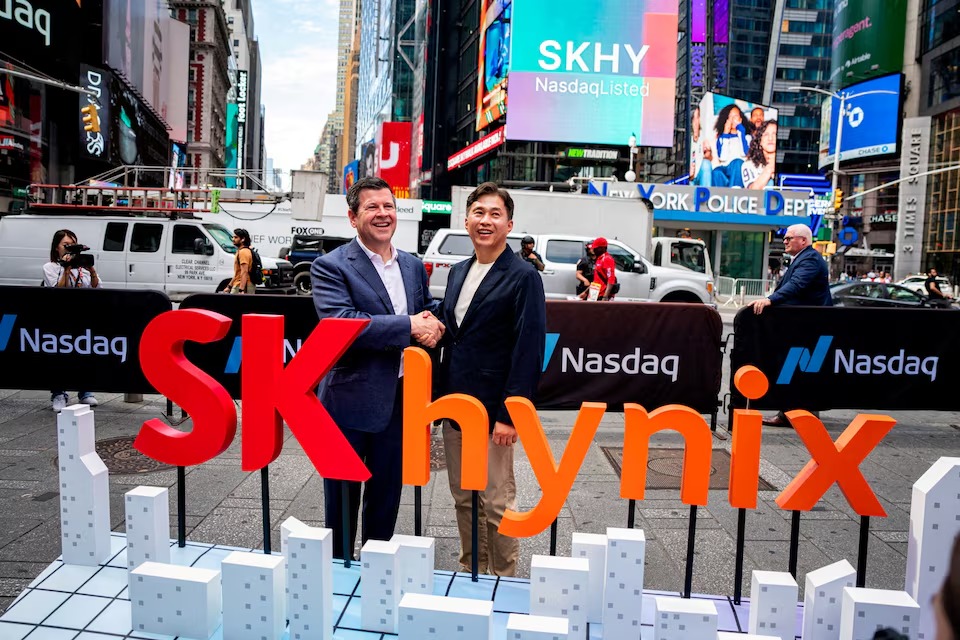
South Korea's SK Hynix said on Friday that its board had approved about 54.3 trillion won ($38.30 billion) of investments through 2031, including 35.2 trillion won for the second phase of construction of its chip fabrication plant in Yongin and 19.1 trillion won for its M17 chip plant in Cheongju.
In June, SK Hynix said it planned to invest 600 trillion won in the Yongin semiconductor cluster and 100 trillion won to expand its production base in Cheongju, adding at the time that detailed investment plans and schedules would be disclosed after receiving board approval.
The company said Yongin's "Y2 fab" is the second of four fabrication plants planned for the cluster and will serve as a production base for dynamic random access memory (DRAM) chips.
DRAM, which temporarily stores data for processors, is a critical component in the servers powering the AI boom.
Construction is scheduled to begin in July next year, with the first cleanroom expected to open in June 2029 to produce high-bandwidth memory (HBM) and other next-generation DRAM products. A cleanroom is a highly controlled manufacturing space that keeps dust and other microscopic contaminants out during the chipmaking process.
Meanwhile, the first-phase Yongin fab remains on track, with its first cleanroom scheduled to open in February next year, the company said in a statement.
Separately, SK Hynix said construction of the M17 fab in Cheongju, which will produce NAND flash memory used to store data in devices ranging from personal computers to AI servers, is scheduled to begin in February next year, with its first cleanroom expected to open in December 2028.
In a separate regulatory filing, the company said it was "actively reviewing" additional shareholder return measures to enhance shareholder value and expects to finalise and announce details in the third quarter. (Reuters, 2026-08-07)