THE PRESIDENT OF THE REPUBLIC OF MOZAMBIQUE ANNOUNCES MAJOR INVESTMENTS IN LNG AND REITERATES HIS CALL TO ATTRACT INVESTMENT FROM THE US
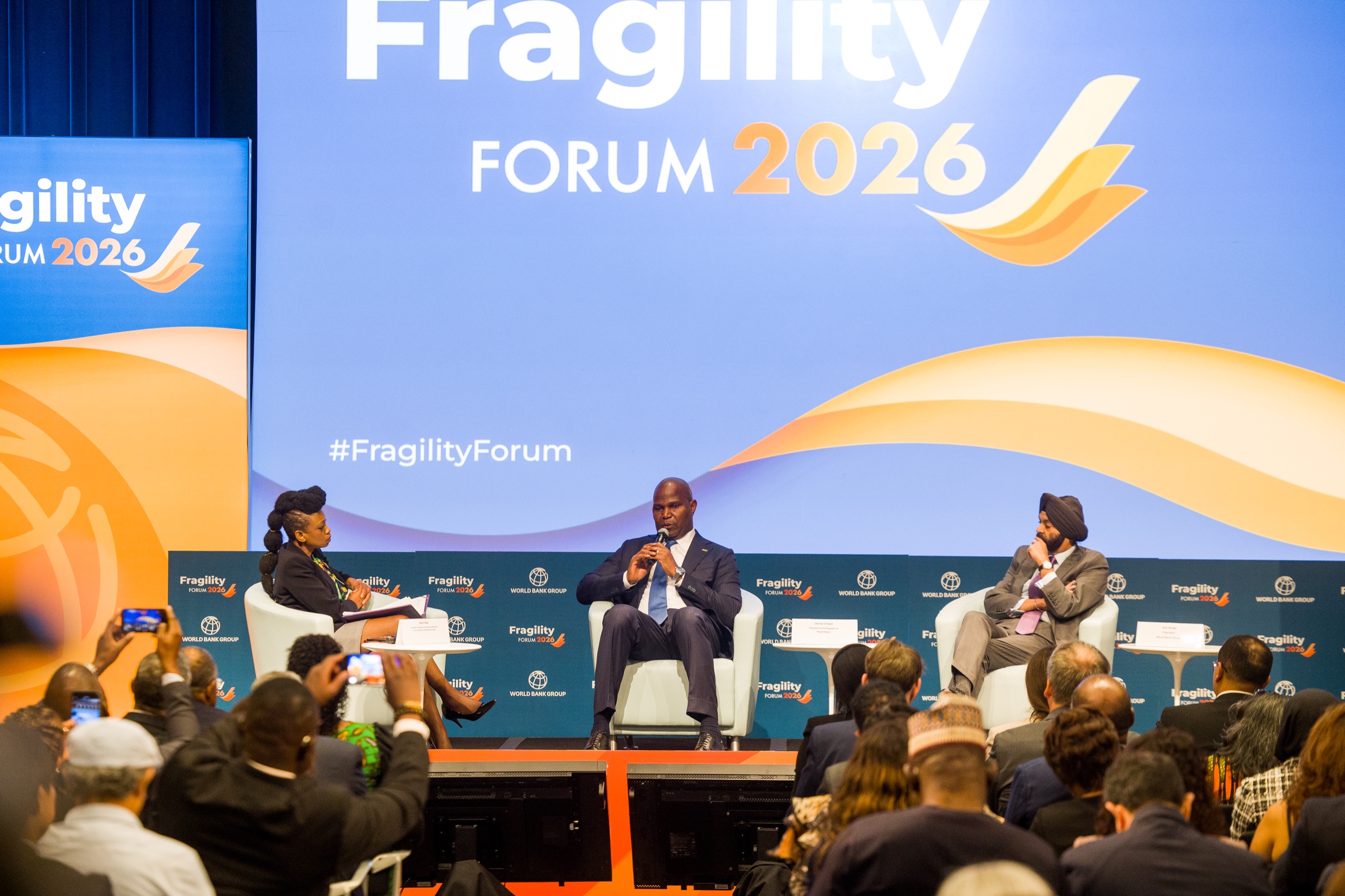
The President of the Republic, Daniel Francisco Chapo, presented on Monday, in Washington D.C., in the United States of America (USA), an investment portfolio in the Liquefied Natural Gas (LNG) sector valued at over 50 billion US dollars (USD) for the coming years, formally inviting the American business elite to expand their presence in Mozambique.
Speaking at a working breakfast with investors on the sidelines of the 2026 Fragility Forum – an event whose opening session he co-chaired with World Bank Group President Ajay Banga – the Head of State highlighted the far-reaching reforms underway to improve the business environment and assured that diplomatic, political and commercial relations with the US are “excellent”.
The Mozambican government’s immediate focus is on the Rovuma Basin, where four major infrastructure projects are underway, two led by the Italian firm ANI and the others by the French company TotalEnergies and the US firm ExxonMobil.
The Head of State outlined the status of each initiative, with particular emphasis on the consortium led by the US firm ExxonMobil, whose investment stands at around USD 20 billion.
“We are now working with Exxon and I am in a position to say that we are well on the way to the final investment decision, which could be taken in August or September 2026,” said President Chapo, highlighting the atmosphere of optimism surrounding the negotiations.
Meanwhile, the project by the French oil company TotalEnergies, budgeted at around USD 15 billion and which had been on hold since 2021 due to the security situation, resumed operations at the end of January this year in Afungi, in Cabo Delgado Province.
“As we speak, the project is up and running. We have just over 5,000 people working on the project,” assured Chapo, highlighting the stabilisation and progress on the ground. The hydrocarbons strategy is rounded off by ENI’s two projects, Coral South and Coral North, which together represent an investment of USD 15 billion.
Despite the high financial inflows anticipated for the coming years, Chapo was keen to emphasise that his government’s long-term goal is based on diversifying the national economy.
To sustain this transition and ensure competitiveness, he said, Mozambique is investing heavily in the energy sector and in industrialisation based on domestic gas, with a view to producing fertilisers and electricity. In addition to increasing the capacity of the Cahora Bassa Dam, with the planned construction of the Central Norte power station, the country is moving forward with the project for the new Mphanda Nkuwa Dam, which will generate a further 1,500 megawatts, amongst other investments.
This abundance of energy serves not only to consolidate Mozambique’s position as an energy hub for the Southern African region, but also as a catalyst for transforming the country into a regional technology hub, through the establishment of data centres, capitalising on the digital transition currently underway in various sectors.
President Chapo also highlighted the transport and logistics sector as possessing an unquestionable competitive advantage, underpinned by three strategic ports, namely those of Maputo, Beira and Nacala, in the southern, central and northern regions of the country, respectively. Regarding the Port of Nacala, he mentioned plans for a special economic and industrial zone connected to Malawi and Tanzania.
To facilitate the modernisation of road and logistics infrastructure, the minister explained that national legislation offers predictability and legal certainty, particularly through three contracting models.
“The first model is that of Public-Private Partnerships, or PPPs. The second model is the concession. And the final model is the BoT (Build, Operate and Transfer). You are invited to invest in Mozambique. And I assure you that you will be making the right decision in every respect,” explained Chapo.
The economic diversification agenda extends to agriculture, driven by the abundance of land and water, and to international tourism, capitalising on the nearly 3,000 kilometres of coastline, islands and conservation areas. The Head of State revealed that a team from the World Bank Group is already in Inhambane Province preparing for the second International Tourism Summit, scheduled for November this year.
In addition, he highlighted the potential for critical minerals, such as graphite, and the memorandum with the US agency Millennium Challenge Corporation (MCC), under the Second Compact for Mozambique, with a budget of USD 537.5 million, for the construction of road infrastructure in the provinces of Zambezia and Nampula.
Also during his economic diplomacy tour in the US capital, the President of the Republic held strategic bilateral meetings with Walter Kanster, ExxonMobil’s Senior Director for Africa, with a view to fine-tuning the steps towards this multinational’s final investment decision in the Rovuma Basin, and held talks with Mark Mitchell, Deputy Assistant Secretary for the Middle East and Africa at the US Bureau of International Trade, with the aim of strengthening institutional ties and business flows between the two nations.